

AI Digital Twin Technology Enters Healthcare — From Disease Prediction to Virtual Surgery
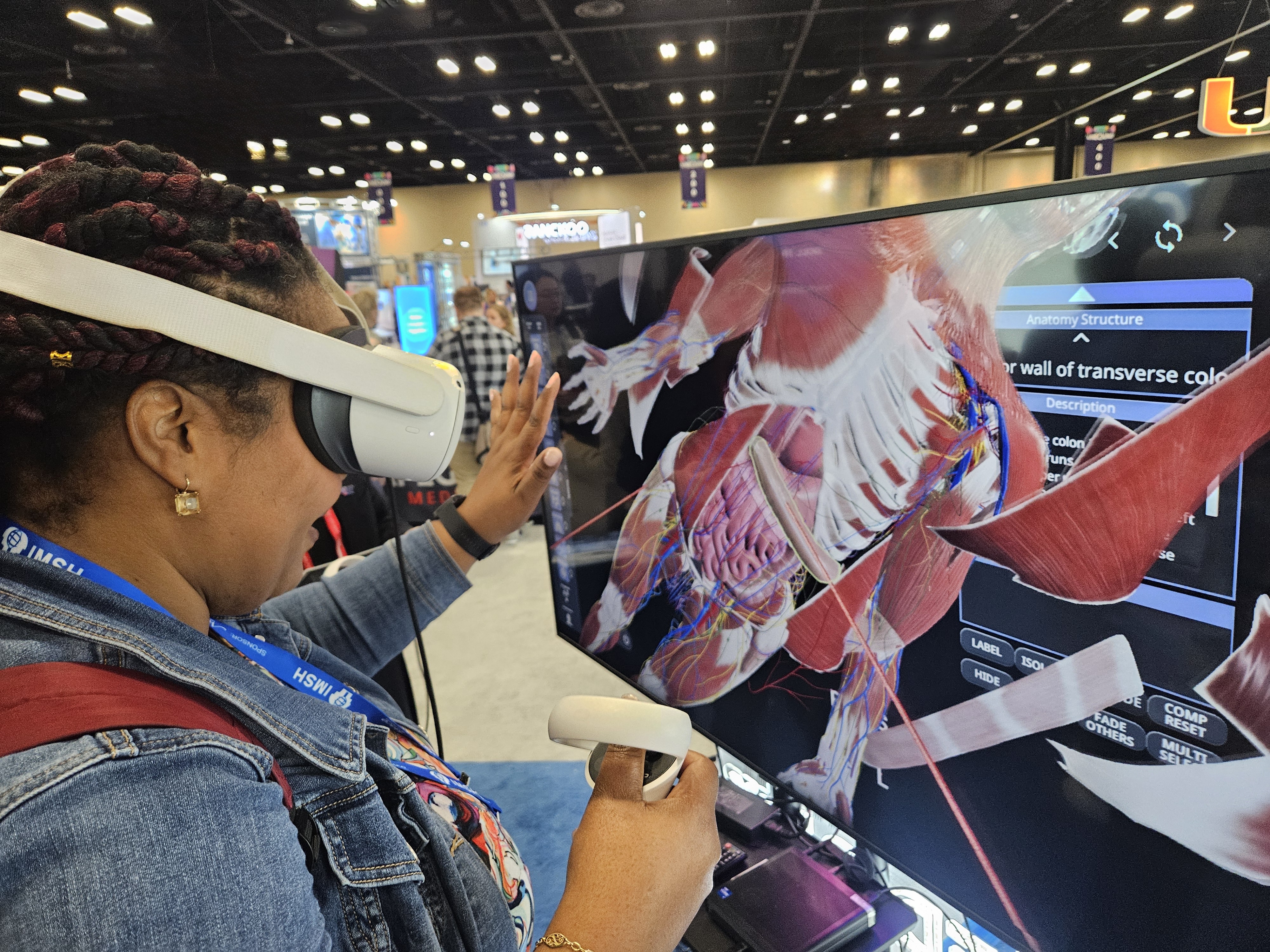
Wearing a virtual reality (VR) headset, the inside of a human body appears in vivid 3D. With a motion controller linked to the device, users can view the skeletal system from multiple angles. A few steps forward bring them virtually inside the body—lungs, heart, and other organs rendered in immersive detail. Even bronchi within the lungs and blood vessels in the heart can be examined precisely. This is Medical IP’s 3D anatomical solution, demonstrated on June 16 at the company’s headquarters in Jongno, Seoul.
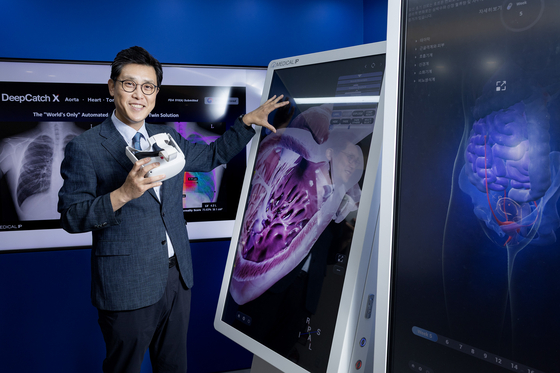
MEDICAL IP, a South Korean AI-powered startup, develops digital twin-based software for healthcare. The company was founded in September 2015 by Sang Joon Park, a professor of radiology at Seoul National University College of Medicine. Digital twin technology digitally replicates physical objects or environments for real-time monitoring, prediction, and simulation. Originally used in manufacturing and aerospace, CEO Park introduced this technology to medicine.
Today, MEDICAL IP’s software is used in 25 hospitals across Korea and has gained global traction, including collaborations with NVIDIA’s Healthcare AI Council. “If there's one field where predictive accuracy and precision are paramount, it's healthcare,” CEO Park said in an interview at the company's headquarters.
Reconstructing the Human Body in 3D for Precision Analysis
What motivated you to start the company?
“During my time as deputy director of the Medical Device Innovation Center at Seoul National University Hospital, I became fascinated by the potential of medical imaging to visualize the human body. But I also felt the limitations: research often ended with academic papers, and technologies didn’t always reach patients. When my late father was battling lung cancer, I experienced firsthand the gap in understanding between patients and doctors. That’s when I realized technology must do more than diagnose—it must tangibly improve lives. In 2015, I launched the startup as Seoul National University Hospital’s first official spin-off.”
Is it difficult to manage both a startup and your academic role?
“Balancing the business, education, and hospital work proved too much, so I resigned from hospital duties five years ago. However, I continue teaching because the synergy between R&D and education is invaluable. Our technologies are directly applicable to medical education, like in anatomy, so I'm constantly learning from onsite.”
How did you decide to apply digital twin technology to medicine?
“Initially, we focused on reconstructing 2D medical images into 3D. But recreating structures alone had limits. I started asking, ‘What if we could simulate a patient’s body across time and space?’ That led me to digital twins. Just as manufacturers simulate airplanes and cars digitally, we can reconstruct and analyze patient X-rays, CTs, and MRIs as 3D models. That opens the door to disease prediction, virtual surgery simulations, and personalized treatment planning.”
Breaking Barriers in a Conservative Industry
What products does MEDICAL IP offer?
“We have two main categories. One is the ‘MEDIP Pro’ AI engine, which colorizes over 7,000 anatomical structures—traditionally seen only in grayscale—using deep learning. Unlike standardized car parts, human organs vary widely. Our AI learns from vast datasets of male, female, and fetal organs to build accurate digital twins. The second product, ‘DeepCatch,’ visualizes 3D models from X-ray and CT scans, screening for diseases like aortic aneurysms, cardiomegaly, and lung conditions using AI.”
Was it difficult to bring new technology into healthcare?
“The conservative nature of the medical industry was our biggest hurdle. Because lives are at stake, new technologies undergo intense scrutiny. In the early days, many dismissed digital twins as just ‘3D games.’ So we focused on delivering real, tangible benefits—visualized data, surgical simulations, digital dissection, and predictive diagnostics—all grounded in measurable precision.”
How is the software used in practice?
“DeepCatch is currently deployed in 25 hospitals, including Pusan National University Yangsan Hospital and Sejong Hospital in Incheon, mainly for health screening. We aim to expand to 50 hospitals by year-end. Sports teams like the Lotte Giants and KT Wiz also use DeepCatch to monitor player health—analyzing muscle balance, bone density, and helping prevent injury. MEDIP Pro is further divided into ‘MEDIP Box’ for anatomy education and ‘Urophantom’ for kidney-specific applications. At the Eswatini medical university in Africa, our software enables cadaver-free anatomy education. Urophantom is also used for surgical planning and simulation in hospitals.”
Making Care and Education Possible Without Infrastructure
How do you balance domestic and overseas operations?
“Since we're aiming to go public on KOSDAQ next year, we’ve been focused on the Korean market. But we’re also pursuing global expansion. The domestic digital twin market is maturing slowly, whereas the global sector is growing at over 30% annually. After DeepCatch received FDA clearance in 2023, we began forming partnerships with hospitals and government agencies in the UAE, China, and Southeast Asia. In April, we became the first Korean company to deliver DeepCatch to China’s top hospital, PUMC (Peking Union Medical College). We’ve also worked with NVIDIA for the past four years, integrating MEDIP Pro with their Omniverse platform to render real-time digital twins from CT and MRI scans. This enables virtual surgeries, blood flow simulations, and biomechanical analyses.”
What is MEDICAL IP’s long-term vision?
“Our mission is to contribute meaningfully to global health through technology. That means increasing public access to medical information and narrowing healthcare disparities. For example, in low-resource countries, students can learn anatomy without cadavers, and serious diseases can be detected early without expensive imaging equipment.”
Voices from the Innovation Ecosystem
“Startups aren’t just about the technology—they begin with a deep desire to improve people’s lives. Sang Joon Park and MEDICAL IP have expanded the frontiers of medicine with AI and digital twins, achieving real-life impact. Their story is a model for Korean deep-tech entrepreneurship.”
— Seung Min Baek, CEO of Honest Ventures
“MEDICAL IP is a rare health-tech company that proves both technological viability and global scalability. Sang Joon Park is a founder with true domain expertise, translating real clinical problems into executable tech solutions. They exemplify the market potential and social impact of deep-tech startups.”
— Beom Min Kim, Director, Korea Medical Device Development Fund
<Source: JoongAng Ilbo, June 27, 2025>
LATEST NEWS



···
