



Class 3 Cancer Risk Assessment Software
MFDS KOREA
World's best performing hepatocellular carcinoma onset and recurrence prediction software
Presenting a new standard in liver cancer risk prediction.
Hepatocellular carcinoma onset risk assessment
software for patients with chronic Hepatitis B








World-class
Liver cancer risk prediction accuracy
Proven accuracy at clinically applicable levels
DeepFore achieved a c-index of 0.89 (95% CI 0.87–0.90),
demonstrating significantly higher performance than
previously published global hepatocellular carcinoma (HCC) prediction models.
DeepFore vs Existing Model Performance Comparison

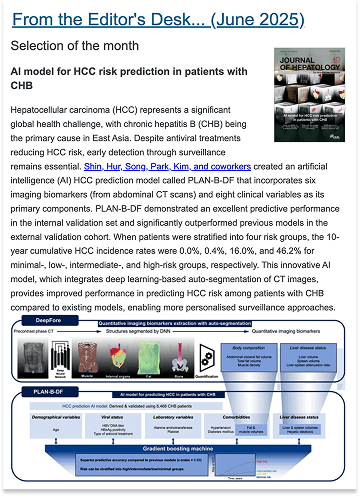
Source: Shin, Hyunjae, et al. "AI model using CT-based imaging biomarkers to predict hepatocellular carcinoma in patients with chronic hepatitis B." Journal of Hepatology 82.6 (2025): 1080-1088.
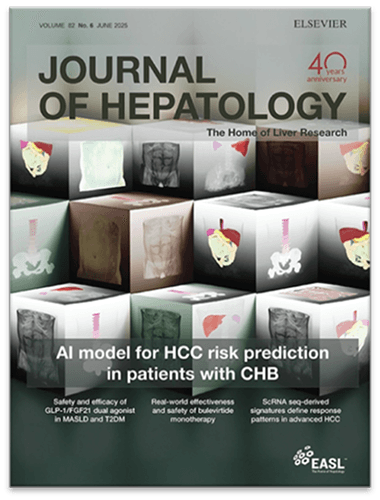
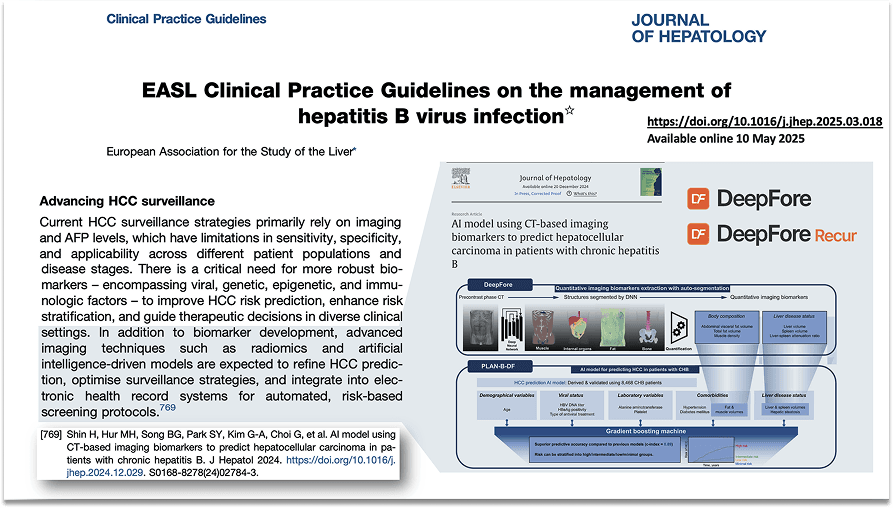
DeepFore's globally recognized technology
Knowing your risk level
is the start of liver cancer management
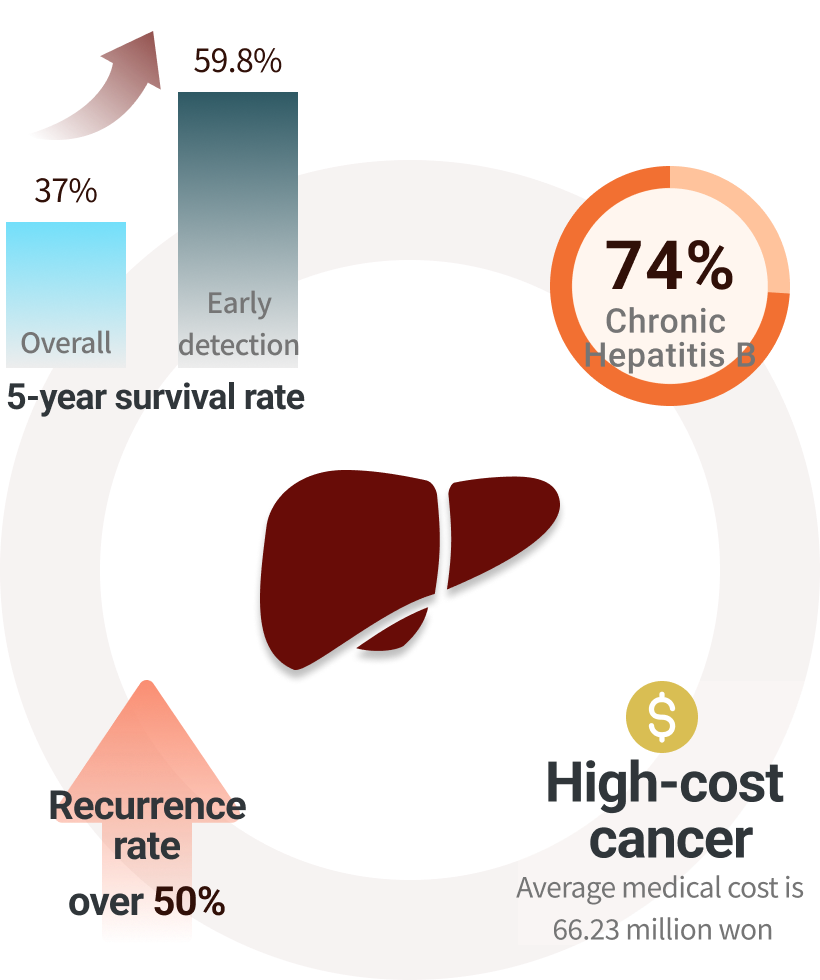
Why is predicting liver cancer risk important?
but early detection improves the 5-year survival rate significantly to 59.8%.
When the disease progresses to liver cancer, annual treatment costs increase to 42.44 million won, and in cases requiring liver transplant, it reaches 155.8 million won annually.(*Source: Korean Liver Disease White Paper, Korean Association for the Study of the Liver)
Thus, liver cancer is a disease that places a significant economic burden not only on patients but also on families and society as a whole.
The risk group is clear, but individual risk levels vary significantly.
Therefore, it is essential to predict and prepare for not only early onset but also recurrence.
Beyond diagnosis that only sees the 'present'
Liver cancer management through 'future risk' prediction

Efficient using DeepFore
Chronic Hepatitis B patient management
Existing process
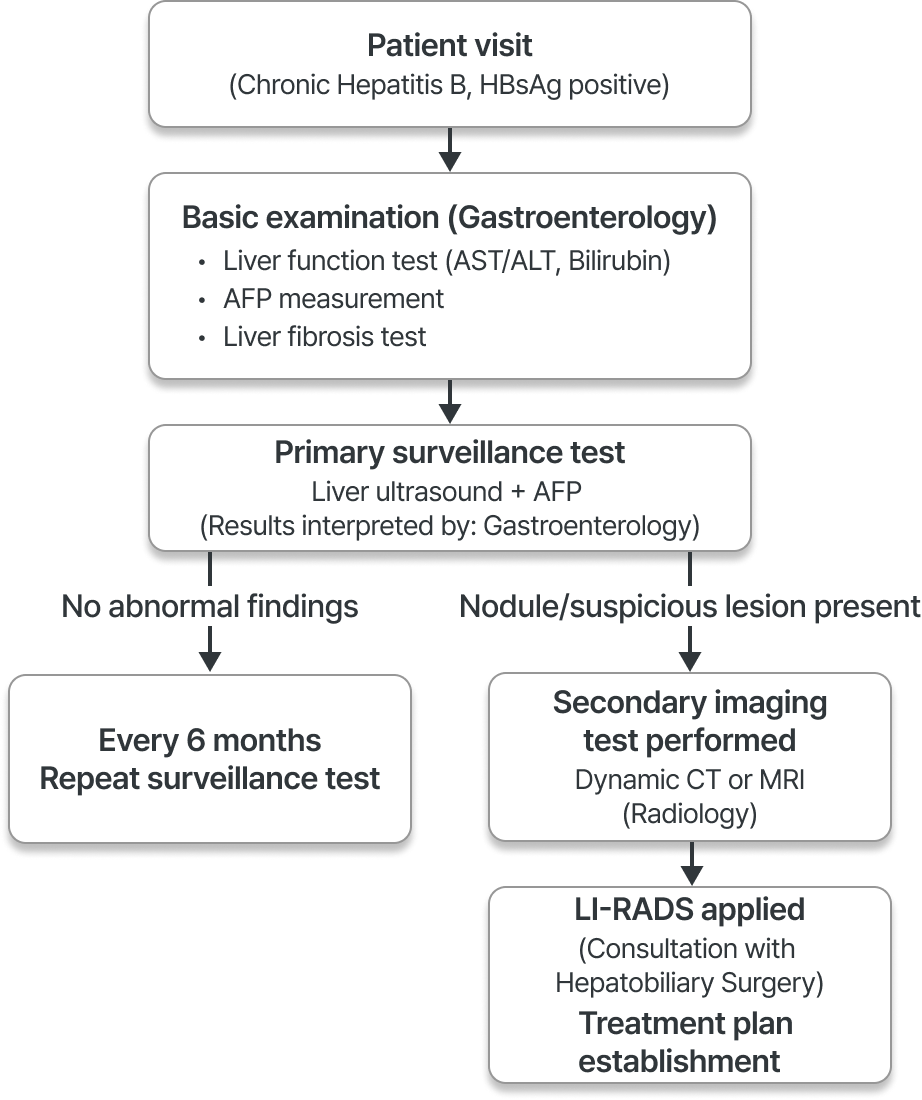
 applied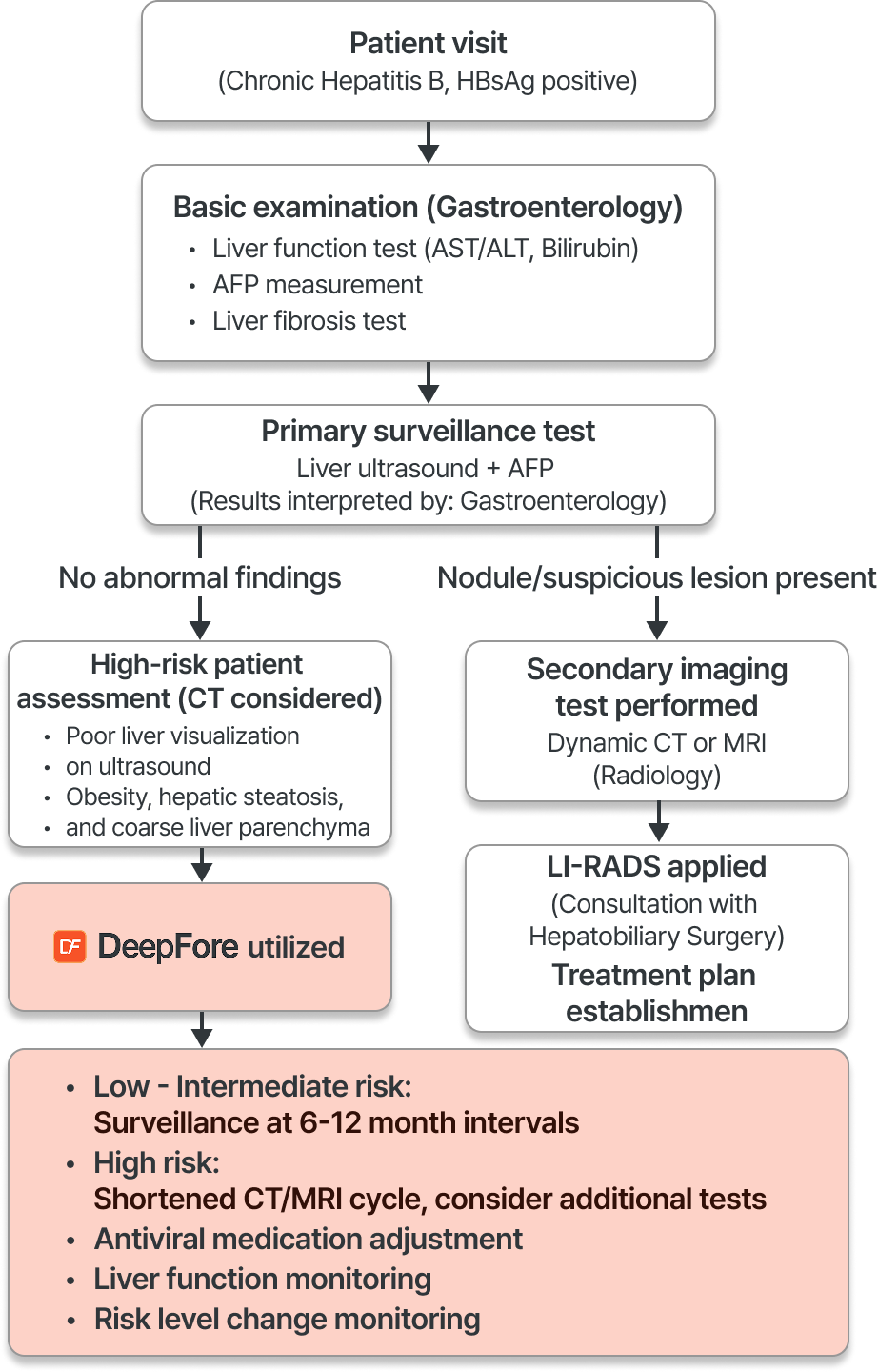
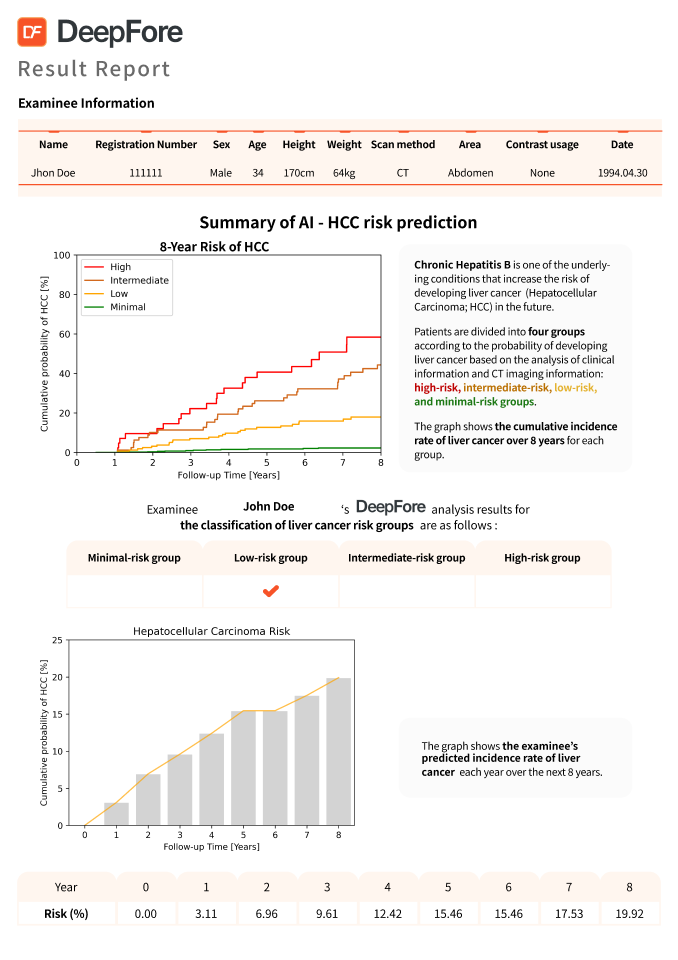
With AI-based precision prediction
Optimal liver cancer management for each patient
DeepFore analyzes clinical information and CT imaging data to precisely categorize patients into 4 groups: high-risk, intermediate-risk, low-risk and minimal-risk.
This enables the establishment of customized management and monitoring strategies for each patient, supporting faster and more accurate patient-centered personalized treatment planning.